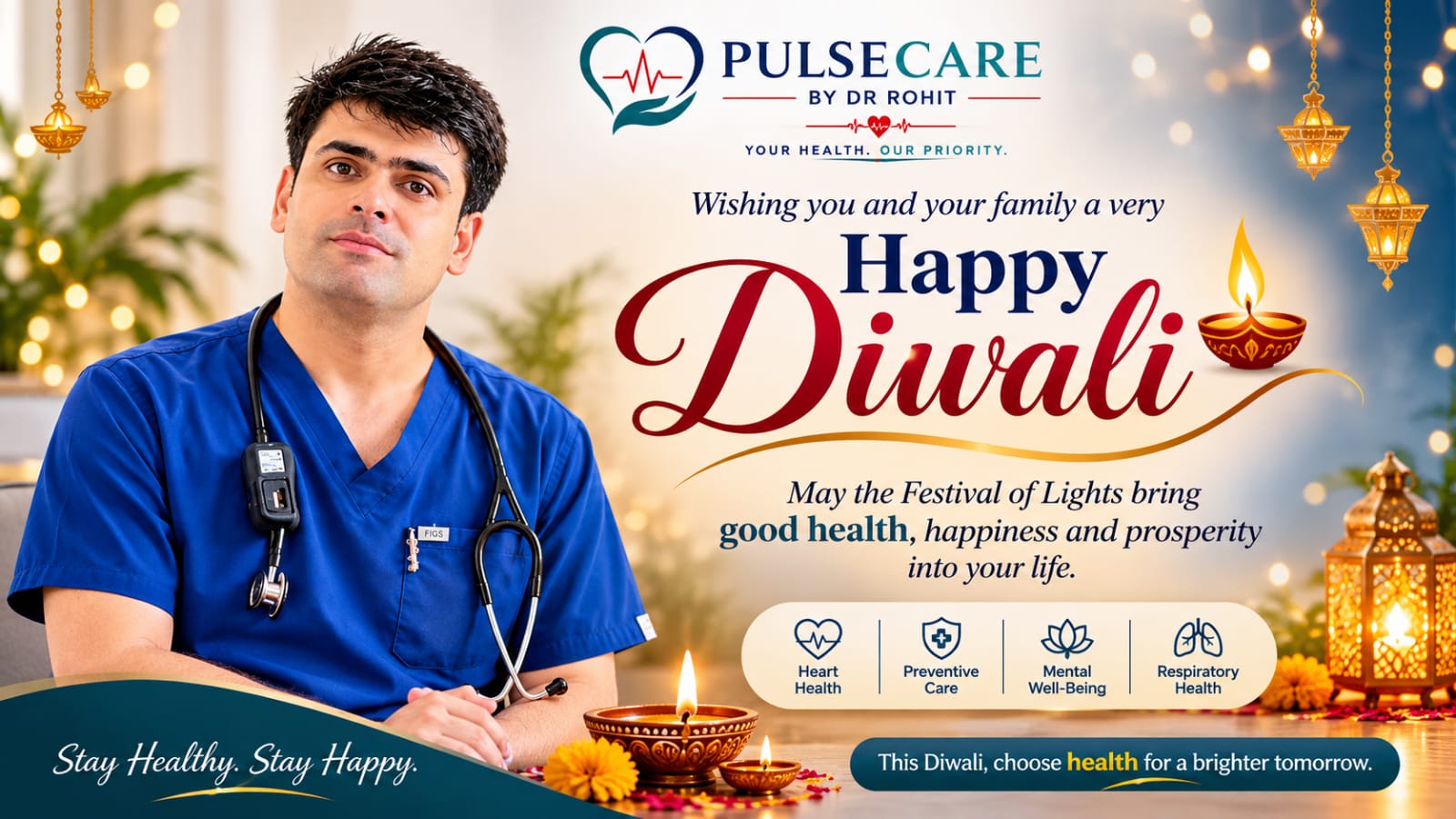
Diwali: Celebrate the Festival of Lights by Embracing Health and Happiness
A Festival of Light, Togetherness and Well-Being
Diwali, widely known as the Festival of Lights, is one of the most cherished celebrations in India. It represents hope, prosperity, positivity and the triumph of light over darkness. Homes come alive with beautiful diyas, colourful decorations, festive delicacies and the warmth of family gatherings. It is also a time to reconnect with loved ones, share happiness and welcome new beginnings.
While Diwali celebrations bring joy and togetherness, the festival also offers an opportunity to reflect on something equally valuable: our health. From the food we enjoy and the air we breathe to our sleep, emotional well-being and everyday routines, our health plays an important role in how we experience the festive season.
At PulseCare by Dr. Rohit, we believe that good health is an essential part of a fulfilling life. Celebrating Diwali with awareness and balance allows us to enjoy its traditions while giving importance to our physical and emotional well-being.
The Significance of Diwali: A Celebration of Light and New Beginnings
Diwali holds deep cultural and spiritual significance across India. Traditionally associated with the victory of good over evil and light over darkness, the festival reminds us of hope, renewal and the importance of positive beginnings.
Lighting diyas symbolises the removal of darkness, while sharing sweets and spending time with family strengthens relationships and creates lasting memories. Beyond its rituals, Diwali encourages values such as gratitude, kindness, generosity and togetherness.
These values also connect with health and well-being. A healthy life is not defined only by the absence of illness; it also involves emotional balance, meaningful relationships, healthy routines and the ability to enjoy everyday experiences.
Diwali Celebrations and Their Connection with Health
Festive celebrations often bring changes to our usual routines. Late-night gatherings, elaborate meals, increased social activity and environmental changes can influence different aspects of health.
Understanding these connections helps us celebrate with greater awareness.
1. Festive Food and the Importance of Balanced Nutrition
Food is an important part of Diwali celebrations. Traditional sweets, savoury snacks and festive meals bring families together and are closely connected with the joy of the occasion.
However, frequent consumption of foods high in added sugar, salt and unhealthy fats may make it difficult to maintain balanced eating habits. This is particularly relevant for people managing conditions such as diabetes, high blood pressure or cardiovascular disease.
Balanced nutrition does not mean avoiding festive food altogether. It means enjoying traditional delicacies in moderation while maintaining a varied diet that includes fruits, vegetables, whole grains and suitable sources of protein.
Staying adequately hydrated and being mindful of portion sizes can also support overall well-being during the festive season.
For individuals with existing medical conditions, dietary choices should be guided by their healthcare professional and individual nutritional requirements.
2. Heart Health During the Festive Season
The festive season can sometimes involve irregular meal timings, reduced physical activity, disrupted sleep and increased consumption of rich foods. These changes may make it harder to maintain routines that support heart health.
A heart-healthy lifestyle involves more than occasional changes in diet. Regular physical activity, balanced nutrition, adequate sleep, avoiding tobacco and monitoring important health parameters all contribute to cardiovascular well-being.
People living with hypertension, diabetes or existing heart conditions should continue following their prescribed treatment plans during festivals rather than postponing routine care.
It is also important not to ignore warning signs such as chest discomfort, unexplained breathlessness, fainting or unusual sweating. New, severe or persistent symptoms require prompt medical assessment. Sudden or severe chest pain or breathing difficulty should be treated as an emergency.
3. Air Quality and Respiratory Health During Diwali
Air quality is an important public health consideration during the festive season. Firecrackers and other sources of combustion can release particulate matter and gases into the atmosphere, potentially worsening existing air pollution.
Exposure to polluted air can affect the respiratory and cardiovascular systems. People with asthma, chronic respiratory illnesses or heart disease may be particularly vulnerable. Children, older adults and pregnant women also require additional consideration.
Air pollution and respiratory health are closely connected. Reduced exposure to smoke, avoiding unnecessary firecracker use and being mindful of local air quality can help support a healthier environment.
During periods of poor air quality, checking the local Air Quality Index (AQI) before planning outdoor activities can help people make informed decisions. Individuals experiencing breathing difficulty, chest discomfort or worsening respiratory symptoms should seek medical advice promptly.
A celebration that respects the environment also contributes to the well-being of the community.
4. Mental Well-Being, Happiness and Family Connections
Diwali is often associated with happiness, celebration and togetherness. Meeting family members, reconnecting with friends, sharing meals and participating in traditions can create a sense of belonging and emotional connection.
Mental well-being is an important part of overall health. Positive social relationships, emotional support and meaningful interactions can contribute to a person's sense of happiness and well-being.
At the same time, festival preparations, financial expectations, travel and busy schedules can sometimes become stressful. Making time for rest, maintaining realistic expectations and enjoying moments with loved ones can help preserve emotional balance.
The true joy of Diwali lies not in perfect decorations or elaborate celebrations, but in the meaningful experiences we share.
5. Sleep, Daily Routine and Physical Activity
Festive occasions can bring changes to everyday routines, including later bedtimes, irregular meals and reduced physical activity. Although occasional changes are a natural part of celebrations, maintaining a reasonable routine can support overall health.
Quality sleep plays an important role in physical recovery, emotional regulation and daily functioning. Getting adequate rest, especially after busy celebrations, helps maintain a healthy balance.
Similarly, regular physical activity supports cardiovascular fitness, metabolic health and general well-being. A comfortable walk, gentle exercise or other activities suited to individual fitness levels can help people remain active during the festive season.
The aim is not to follow a strict routine during every celebration, but to maintain healthy habits wherever possible.
A Healthier Diwali Begins with Collective Awareness
Health-conscious celebrations are not only an individual responsibility; they also reflect care for families, neighbours and the wider community.
Being mindful of air quality, avoiding excessive noise, handling decorative lights and diyas carefully, and keeping children away from firecracker-related hazards can make celebrations safer.
Firework-related burns and eye injuries are preventable risks. Following official safety guidance, keeping a safe distance from fireworks and ensuring that children are supervised can help reduce accidents. In case of a burn, cool the affected area under clean, cool running water and seek appropriate medical care. Serious burns and eye injuries require urgent medical attention.
Small, thoughtful decisions can make a meaningful difference to community health and safety.
Preventive Healthcare: An Important Part of Long-Term Well-Being
Festivals are also a reminder to appreciate the health that allows us to participate in everyday life. While celebrations bring temporary excitement, preventive healthcare supports long-term well-being.
Regular health check-ups and appropriate screening can help identify certain health concerns early, depending on a person's age, medical history and risk factors.
Monitoring blood pressure, blood glucose and other relevant health parameters, when recommended, can support informed healthcare decisions. People with existing medical conditions should maintain regular consultations and follow their prescribed treatment plans.
Preventive healthcare is not limited to visiting a doctor when symptoms appear. It also includes developing healthy habits, understanding personal risk factors and seeking professional guidance when needed.
Celebrate Diwali with Light, Love and Good Health
Diwali reminds us that light brings hope, happiness and new beginnings. The festival is an opportunity to celebrate our traditions, strengthen relationships and create beautiful memories with the people who matter most.
As we illuminate our homes and share the joy of the occasion, let us also remember the importance of good health, heart health, balanced nutrition, mental well-being and preventive healthcare.
Because the greatest celebration is one that allows us to enjoy life's special moments with health and happiness.
Happy Diwali!
PulseCare by Dr. Rohit wishes you and your family a joyful, peaceful and healthy Diwali.
Stay Healthy. Stay Happy.
Educational Disclaimer:
This article is intended for general health education and awareness only. It does not replace professional medical advice, diagnosis or treatment. Individual health needs may vary. Consult a qualified healthcare professional for personalised medical guidance.