PULSECARE BY DR. ROHIT | PATIENT EDUCATION
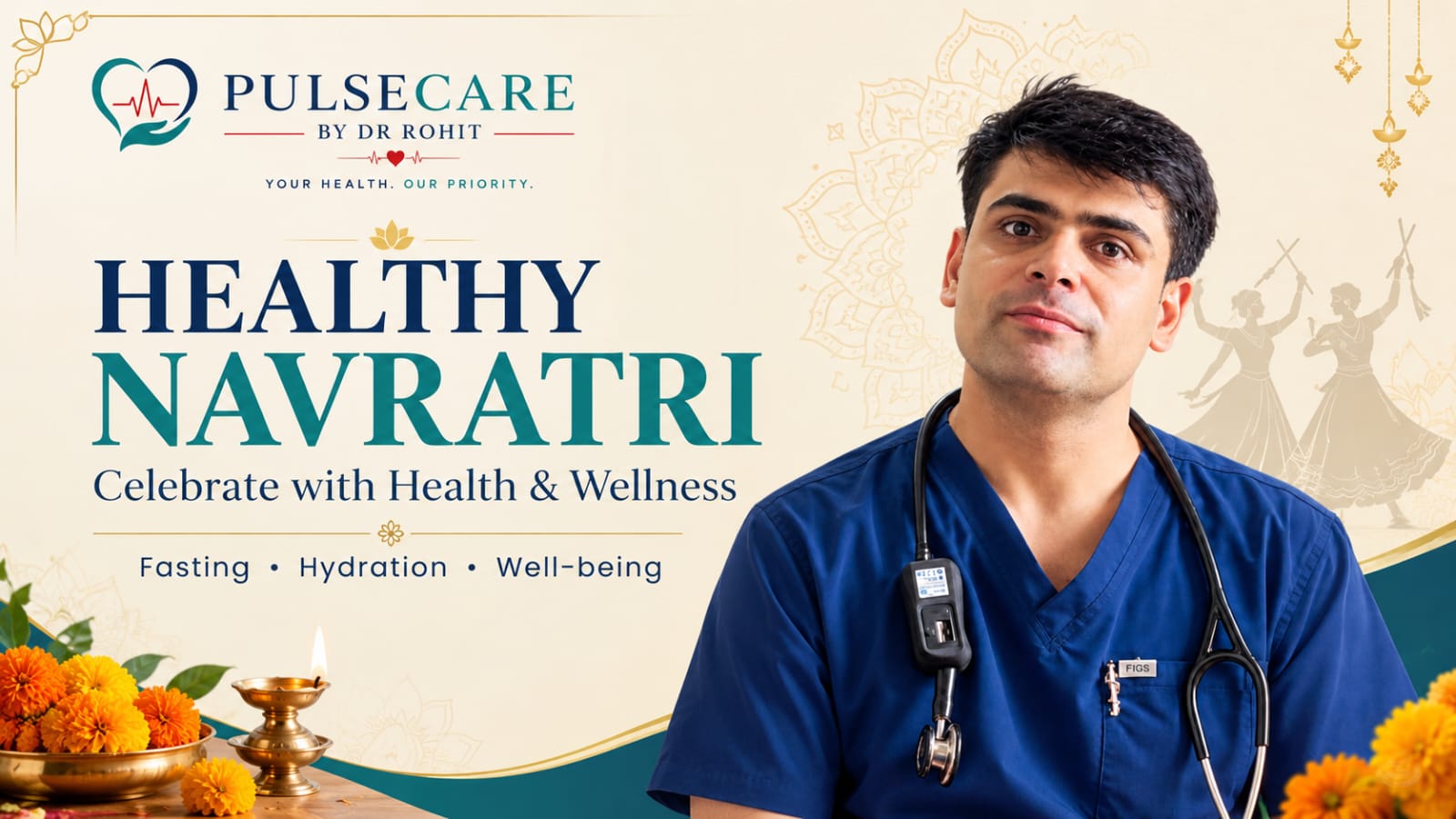
Healthy Navratri Fasting Tips: Stay Hydrated, Energized and Well
Practical guidance on fasting, balanced food choices, hydration and well-being during Navratri.
Navratri is a time of devotion, celebration and traditional fasting for millions of people across India. From preparing vrat-friendly meals to participating in Garba and Dandiya, the festival brings people together in a spirit of joy and faith.
However, changes in eating patterns during fasting can sometimes lead to fatigue, dehydration, headaches or dizziness, particularly when meals and fluid intake are inadequate.
With a few thoughtful choices, you can observe your traditions while making your health a priority.
Why Does Healthy Fasting Matter During Navratri?
Navratri fasting practices vary from person to person. Some people eat fruit and one or two vrat-friendly meals, while others follow stricter fasting routines.
When food intake changes, it is important to ensure that the body still receives adequate fluids, energy and essential nutrients. Relying mainly on fried snacks, sweets or large portions of starchy foods may leave your diet less balanced.
Key Takeaway
A mindful approach to fasting focuses on nourishment and well-being rather than simply restricting food.
7 Healthy Navratri Fasting Tips
1. Stay Hydrated Throughout the Day
Adequate hydration helps maintain normal body functions and reduces the risk of dehydration-related symptoms.
Drink water regularly if your fasting practice permits it. Coconut water and other suitable fluids may also be options, depending on your dietary requirements.
Important Consideration
If your fast involves avoiding fluids, or if you have a medical condition that requires fluid restriction, seek appropriate medical guidance.
2. Choose Balanced Vrat-Friendly Foods
Traditional fasting foods can be included in a varied diet. Depending on your fasting customs, suitable options may include:
Try to combine different food groups rather than relying on a single food throughout the day.
3. Avoid Depending Only on Fried Snacks
Foods such as fried potatoes, pakoras and puris are common during Navratri. However, frequently choosing deep-fried foods may increase your intake of oil and calories without providing a balanced range of nutrients.
Consider including boiled, steamed, roasted or lightly cooked options alongside your traditional favourites.
The aim is not to eliminate every festive food but to maintain variety and moderation.
4. Eat According to Your Body’s Needs
Skipping meals for long periods and then eating a very large meal may cause discomfort for some people.
If your fasting routine allows meals or snacks, consider eating manageable portions at suitable intervals. Pay attention to hunger, fullness and changes in your energy levels.
Avoid pushing yourself to continue a fast if you feel significantly unwell.
5. Maintain a Healthy Sleep Routine
Late-night celebrations, early-morning rituals and changes in meal timings can affect sleep.
Try to maintain a consistent sleep schedule and allow enough time for rest. If you are feeling unusually tired, consider reducing strenuous activity rather than pushing through exhaustion.
6. Be Mindful During Garba and Dandiya
Dancing is an enjoyable part of Navratri, but extended physical activity can increase fluid and energy requirements.
Wear comfortable footwear, take regular breaks and avoid dancing intensely when you feel weak, dizzy or dehydrated.
Know When to Stop
If you experience chest pain, fainting, severe breathlessness or other concerning symptoms, stop the activity and seek urgent medical attention when appropriate.
7. Break Your Fast Mindfully
After a prolonged fast, avoid immediately consuming a very large or heavy meal.
If your fasting practice allows, begin with a comfortable portion of food and eat slowly. Choose foods that fit your dietary requirements and gradually return to your usual eating pattern.
Who Should Take Extra Care During Navratri Fasting?
Fasting is not equally suitable for everyone. People living with diabetes, heart disease, kidney disease or other chronic conditions may need individual guidance before changing their food or fluid intake.
Pregnant or breastfeeding individuals, older adults and people who are underweight or recovering from an illness should also seek advice appropriate to their circumstances.
Medication Safety
If you take prescription medicines, do not stop them or change their dose or timing without consulting your healthcare professional. Some medicines need to be taken with food or at specific intervals.
Warning Signs You Should Not Ignore
Feeling severely weak, persistent dizziness, fainting, confusion, chest discomfort or unusual breathlessness should not be dismissed as a normal part of fasting.
Stop strenuous activity and seek medical advice. Severe or sudden symptoms may require emergency care.
Your health and safety should remain a priority throughout the festival.
Celebrate Navratri With Faith and Well-Being
Navratri offers an opportunity to celebrate tradition, spend time with loved ones and participate in meaningful rituals.
Healthy fasting does not require ignoring your body's needs. Thoughtful food choices, adequate hydration when permitted, sufficient rest and appropriate medical guidance can help you approach the festival more safely.
This Navratri, honour your traditions while making informed choices for your well-being.
At PulseCare by Dr. Rohit, we believe that better health begins with informed decisions and the right medical guidance.
Medical Disclaimer
This article is intended for general educational purposes and does not replace personalised medical advice. Fasting recommendations may differ according to individual health conditions and treatment requirements.
Dr. Rohit Kumar Tiwari
PulseCare by Dr. Rohit